
Chevening alumna paves the way for a brighter future
Ahead of COP30, Chevening alumna Maria Esteli Jarquin had the opportunity to share her work championing biodiversity and conservation efforts in Costa Rica with the Prince of Wales.
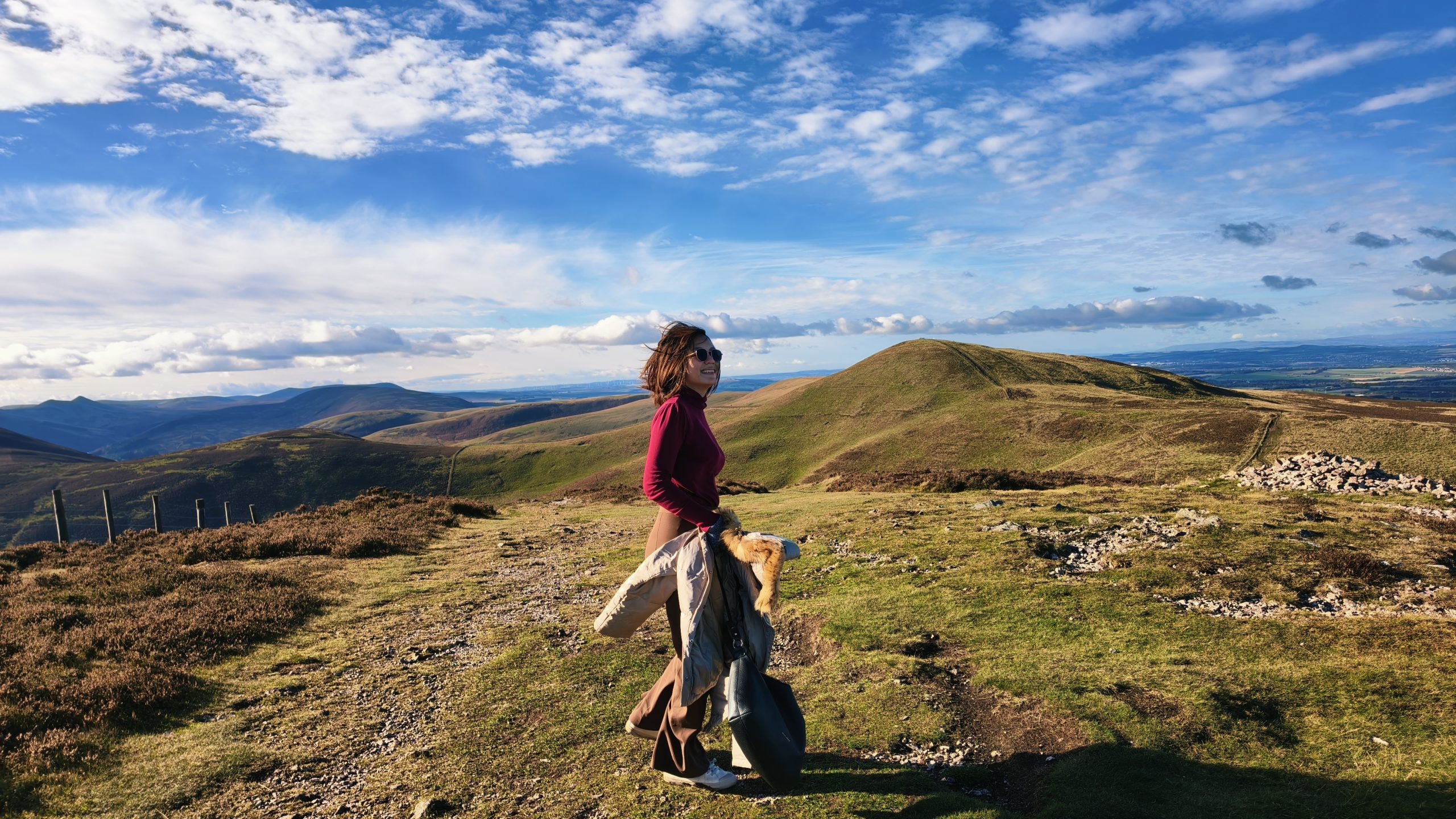
Chevening scholar Weeraya (Min) Vichayaprasertkul has a plan to drive climate action across Southeast Asia, and studying at the University of York is helping her to get there.
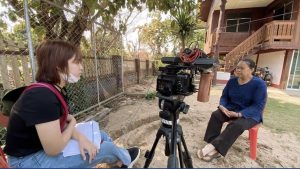
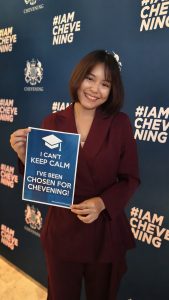 Chevening scholar Weeraya (Min) Vichayaprasertkul is a climate change documentary filmmaker and environmental media producer from Thailand, who is currently completing her master’s at the University of York.
‘My goal is to guide young people to understand how impactful media can raise environmental awareness, inspire meaningful change, and advance sustainable policies,’ Min explains. ‘I aim to train 100 youth content creators annually across ASEAN in communicating environmental issues. I also hope to collaborate with the Chevening network to conduct environmental media workshops for young storytellers.’
My long-term goal is to become a university lecturer specialising in environmental communication, sharing the insights and best practices I gain from the UK. In addition, I want to help strengthen environmental education in Thai schools by developing learning programmes that are engaging, accessible, and easy to understand.
We interviewed Min to find out how studying in the UK with Chevening will help her to achieve these goals.
‘I grew up watching documentaries from the UK, which inspired me to connect with nature and protect the environment,’ Min reveals. ‘I have always believed that good environmental media can influence people to love nature, and this belief has continuously driven my career.’
The UK is home to many of my role models in environmental communication, including Jane Goodall and David Attenborough.
This passion for impactful storytelling became even more important to Min as she began to understand the urgency of environmental issues in her home country.
‘Thailand and Southeast Asia are among the most climate-vulnerable regions in the Global Climate Risk Index. Due to increasing droughts and floods, the region faces severe economic impacts, particularly in tourism and agriculture. Despite the gravity of these issues, public awareness remains low, largely because environmental media coverage in Thailand is limited.’
Undertaking a master’s in environmental sustainability education and communication at the University of York has provided Min with an opportunity to address this gap.
She explains that, as an interdisciplinary programme, it ‘draws on the strengths of the Department of Education—ranked 5th in the UK for research—and the Department of Environment and Geography, which is ranked joint 2nd for research impact’.
I am particularly drawn to the way it blends theory with hands-on practice.
‘One of my favourite modules is Transformative Environmental Education, where each week I learn a wide range of tools for teaching environmental topics, including board games, storytelling methods, citizen science activities, and creative craft-based learning. These practical approaches have deeply inspired me, giving me ideas for how to teach environmental topics to youth in more engaging and accessible ways.
‘Looking ahead, the Communicating the Climate Emergency module will equip me to understand and communicate scientific data from the Intergovernmental Panel on Climate Change (IPCC) reports more effectively… something I have often struggled with when producing climate change documentaries.’
But it’s not just in-class learning that Min benefits from at the University of York.
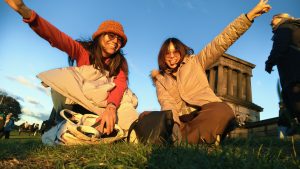
‘York is one of the safest cities in the UK. What I love even more is that the university is surrounded by lakes and rich biodiversity. There are flocks of geese and swans, rabbits, and even foxes wandering around campus. As someone who loves nature, studying in an environment like this deeply fulfils me.
‘I am also inspired by the City of York’s success in environmental management, having reduced its carbon emissions by more than 50% within just three years. The city offers numerous environmental activities and NGOs where I can learn, volunteer, and expand my experience every week.
‘Another aspect I value is the strong support system provided by the university. York offers extensive academic and soft-skills support, all free for students, such as 3D learning workshops, communication training, and video-editing skills. There is also excellent career support, where I can drop in for guidance on job planning, CV writing, or interview techniques.
‘My supervisor has also been incredibly supportive. I had the opportunity to screen one of my Thai documentaries at the university, where international audiences joined, watched, and exchanged thoughtful feedback. My supervisor frequently shares environmental events and opportunities with me, encouraging me to participate.’
I feel that I am learning to my fullest potential, both inside and outside the classroom.
We can’t wait to see Min apply everything she’s learned when she completes her studies and joins our incredible alumni community.
Ahead of COP30, Chevening alumna Maria Esteli Jarquin had the opportunity to share her work championing biodiversity and conservation efforts in Costa Rica with the Prince of Wales.
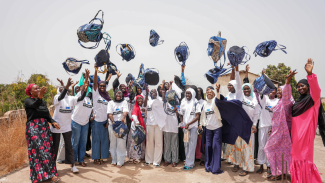
‘This is proof that when young women show up and participate in community development, they can lead... Women have a place at the table, and we must claim it.’
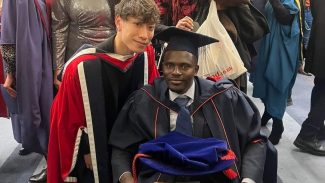
Chevening alumnus Mahmud Abdullahi shares how studying in the UK has helped him to improve health systems for people with disabilities.